The scene: You’re on your way to a meet a friend at a café but when you ask directions, no-one understands you, you ask for your coffee and the staff can’t make sense of what you say, you want to call a cab afterwards but your words go unheard. Everywhere you turn there is a gulf of understanding. It sounds like a low budget sci-fi film but this is daily reality for many deaf people. The mainstream world often places barriers that make everyday communication a stressful challenge.
1 in 5 adults suffer from hearing loss and this figure increases to 1 in 3 over 50. They suffer increased levels of isolation and poor mental health from stress-attrition but it also hurts businesses too – talent is locked up, customers are lost and we are contributing to an exclusionary culture that no one wants to belong to.
Jemima Buoy is GDA’s Deaf Inclusion Trainer and as a deaf person she knows first-hand how small adjustments can make a huge difference.
‘It’s not just about missing out on information. It’s about missing out on connection. Those little moments of being left out, day after day, can chip away at your confidence and wellbeing.”
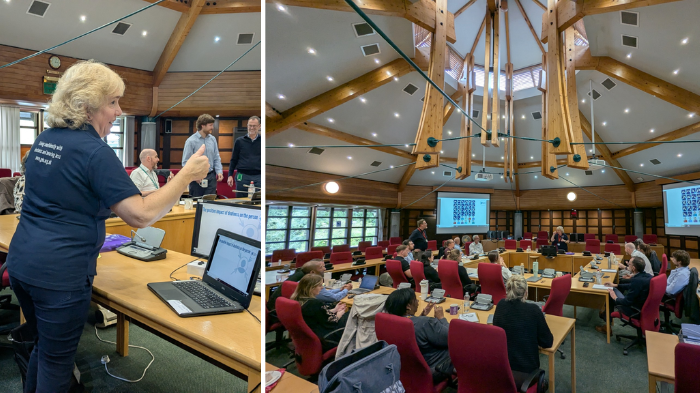
She believes that deaf inclusion training should be a mandatory part of everyone’s work toolkit. It allows people to step into deaf people’s shoes and explore the issues in a safe space where they learn some sign and have fun with lipreading challenges.
Jemima finds people are often curious but afraid to ask: ‘People ask if Sign Language is universal, if it has regional ‘accents’ and whether deaf people can enjoy music. These are the questions people are often too shy to ask — until the safe space of a GDA session gives them permission’
‘One participant told me the training completely changed the way they understood their hard of hearing sibling. They finally realised the everyday struggles weren’t personality quirks — they were barriers. That shift in perspective is powerful.”
Deaf Inclusion Training is teambuilding, consciousness raising and paradigm shifting all in one and the ripple effects could lead to an entirely different Gloucestershire, one where a shop assistant greets a deaf customer with a smile and clear eye contact. A manager ensures captions are switched on for every meeting. A pottery class pauses to check everyone has followed the instructions or online tickets have BSL information before they go on sale.
The equality act was passed to address these concerns in 2010 to ensure that services hospitals, schools and businesses treat their users and customers equally but how many have actually taken the time to put inclusion first? Now that BSL is a legally recognised language it could be that many organisations are operating in breach of the law.
This is where Deaf Inclusion Training can help companies to reach legal compliance, positively impact their working culture and provide their piece of the jigsaw in making Gloucestershire a leader in inclusive practice.
This vision of Gloucestershire is shared by Stroud District council who are undertaking deaf inclusion training for their staff. Their first session challenged their assumptions but also delivered confidence in dealing with deaf people, they fed back that it will change the way they work:
‘I think more of an awareness is really helpful in our job. The content was really engaging and interesting, but for me the best part was having the opportunity to meet someone with personal experience’.
‘It allowed me to think in ways I hadn’t thought to before about deafness & the community. It was so important to hear how we can apply it to our work’.
‘An outstanding session’, ‘Putting in a little more effort to communicate can mean so much to deaf people’
For Jemima, it’s a personal endeavour. She says that for her ‘it’s an opportunity to share the richness of deaf culture. At the start, people can be nervous but very quickly a dialogue starts, “I’ve worked in hearing companies where colleagues were kind, but I never felt fully part of the team but in organisations where everyone had some deaf awareness training and could sign at a basic level, the difference was huge’
Deaf Awareness isn’t just a box ticking exercise, teams become more inclusive and innovative when deaf colleagues can fully contribute, staff trained in deaf awareness deliver better customer service, earn trust, and build loyalty. Businesses meet their Equality Act 2010 obligations with confidence and reputations grow stronger in a world where inclusivity matters.
If your business or organisation is ready to take that step get in touch with us at bslcollege@gda.org.uk